1
We map the restricted tissue.
Instrument-assisted soft tissue work that breaks up the scar tissue and adhesions left behind by chronic overuse injuries.
What It Is
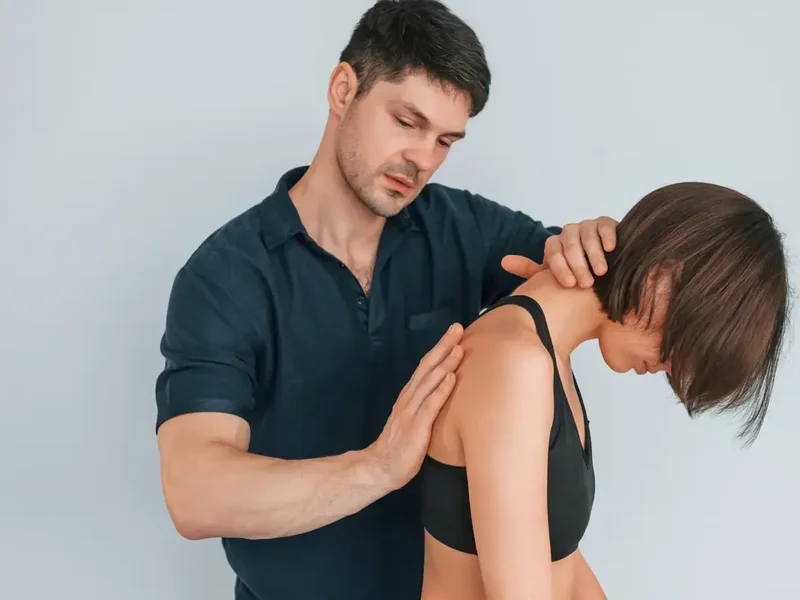
Chronic overuse injuries leave behind scar tissue and adhesions: dense, disorganized fibers that build up around a tendon or muscle and never fully smooth out on their own. Graston Technique uses specialized stainless steel instruments, guided by your Doctor of Physical Therapy, to find and break up that buildup. It tends to fit best with people who've already given an old ache the "it'll work itself out" treatment for months and are ready to actually address the tissue instead of waiting it out again.
The edge of the instrument locates restrictions your hands might miss and applies a controlled scraping motion directly over them. That mechanical pressure helps break up the adhesions and kicks off the tissue's own healing response.
It's typically used alongside exercise and strengthening, not as a standalone fix, since restoring normal tissue quality is only half the job. The other half is loading it correctly so it stays that way. Left alone, that old scar tissue doesn't usually resolve on its own; it tends to keep tightening around the area, quietly limiting the same motion until an old overuse injury turns into a permanent limp in how you move.
 Built for scar tissue that's overstayed its welcome
What It Helps
If an old overuse injury has left tissue that feels thick, ropy, or stuck, this is built for exactly that.
What A Session Looks Like
1
We map the restricted tissue.
2
Instrument-assisted work breaks it up.
3
We load it while it heals.
Why It Works
Finds restrictions your hands might miss.
Breaks up chronic scar tissue.
Kicks off the tissue's own healing response.
Fits the plan you're already on.
Pairs Well With
Questions, Answered
It does. The instrument's edge finds dense, disorganized scar tissue that's built up around a tendon or muscle, and the controlled pressure breaks up those adhesions and kicks off the tissue's own healing response, a mechanical effect that's hard to reach with hands alone. As for how it feels, most people notice firm pressure or mild tenderness over the restricted area rather than sharp pain. Some redness or light bruising afterward is common and usually fades within a few days. We adjust the pressure to your tolerance and explain what to expect before we start, so nothing about it catches you off guard.
It depends on how long the scar tissue has been building up and how your body responds. Many patients notice a change within a handful of visits when it's paired with the exercises that keep the tissue from tightening back up.
Most PPO plans cover it as part of a standard physical therapy visit, and we verify your exact benefits before your first session so there's no surprise on your bill. Questions before then? Call us at (401) 999-7325.
Book Your Visit
Request a time and a real person calls you back, usually within two business hours. No phone tree. No ‘someone will reach out.’ Just a plan.
5.0 · 208+ Google reviews
Typical response: under 2 business hours
Step 1 of 5
That’s the hard part done. We’ll call during business hours to lock in your time. Most people are on the schedule same week.
Visit Us